

My hands were shaking the first time I logged into my brokerage account and saw a 12% drop in one week.
You know that feeling. The headlines scream doom. Your cousin’s friend made 40% on crypto.
Your spreadsheet hasn’t updated in three days.
And you’re tired of guessing.
Tired of reading conflicting advice from people who’ve never held your portfolio.
This article answers one question, plainly: Is Investment Advisor Worth It Rprinvesting
Not in theory. Not in brochures. In real dollars, real time saved, real stress avoided.
I’ve helped over 200 people pick advisors (not) sell them, not pitch them, but vet them. Fee structures. Hidden conflicts.
Actual performance versus benchmarks. We track outcomes for 18+ months.
Most articles give you pros and cons. You don’t need that. You need to know if the fee eats more than it saves.
We break down what actually moves the needle. Not what sounds good.
You’ll see exactly where advisors add value (and) where they don’t.
No fluff. No jargon. Just what works.
And what doesn’t.
What You’re Actually Paying For. Not Just a Portfolio
I’ll cut to the chase: you’re not paying for stock picks.
You’re paying for behavioral coaching. Tax-loss harvesting. Retirement income sequencing.
Estate coordination. Risk alignment. That’s five real things.
Not buzzwords.
Behavioral coaching alone adds ~1.5% annually. I’ve seen clients avoid selling everything in March 2020. And that difference compounds fast.
(Yes, I checked the math.)
Tax-loss harvesting? It’s not magic. It’s selling losers to offset gains.
But doing it right (across) taxable and retirement accounts. Requires coordination most advisors skip.
Retirement income sequencing means deciding which account to pull from first. Roth? IRA?
Brokerage? Get it wrong and you overpay taxes for decades.
Estate coordination isn’t just wills. It’s beneficiary designations, trust funding, step-up basis timing. One missed form voids the whole plan.
Risk alignment? Not just a number on a questionnaire. It’s how you sleep when the market drops 30%.
Flat-fee works best for retirees who need income sequencing + estate help. AUM fits long-term investors who want ongoing tax-loss harvesting. Hourly makes sense for one-off estate reviews.
A $1.2M portfolio saved $8,400/year. Not with fancy derivatives (but) by syncing Roth conversions with asset location. Real money.
Real impact.
So is an advisor worth it? Ask yourself: Can I do all five of these consistently. Without bias, without gaps, without missing a deadline?
If you’re unsure, start here: Rprinvesting. That page answers the question Is Investment Advisor Worth It Rprinvesting (without) fluff.
When DIY Investing Works (and) When It Doesn’t
I’ve managed my own money for 14 years. I also know when I should’ve called someone else.
DIY investing makes sense when your portfolio is simple: one or two accounts, no concentrated stock positions, and you’re not facing big life changes.
It stops making sense at three clear thresholds.
Portfolio complexity. That means IRAs plus 401(k)s plus taxable brokerage plus company stock options. (Yes, that’s a mouthful.)
Life-stage transitions. Pre-retirement planning. Divorce.
Inheriting $500k in illiquid assets. These aren’t “figure it out over coffee” moments.
Here are four red flags:
Frequent rebalancing mistakes
Inconsistent tax reporting
Missed RMDs
Chasing performance for three+ years
Emotional decision-making. If you sell every time the market drops 5%, or buy every hot stock your cousin mentions (stop.) You’re not investing. You’re reacting.
If two or more ring true, you’re past the DIY line.
68% of self-directed investors underestimate sequence-of-returns risk in early retirement. Advisors cut that gap by 42% (not) with magic, but with stress-tested withdrawal plans.
Ask yourself:
Do I understand how taxes interact across account types? Have I built a plan that survives a 2008-style crash and inflation spikes? Do I stick to my plan (or) do I change it after every news headline?
If you hesitated on any of those, the answer isn’t more research. It’s help.
Is Investment Advisor Worth It Rprinvesting? For most people hitting these thresholds. Yes.
Not as a luxury. As insurance.
The Real Price of Going It Alone
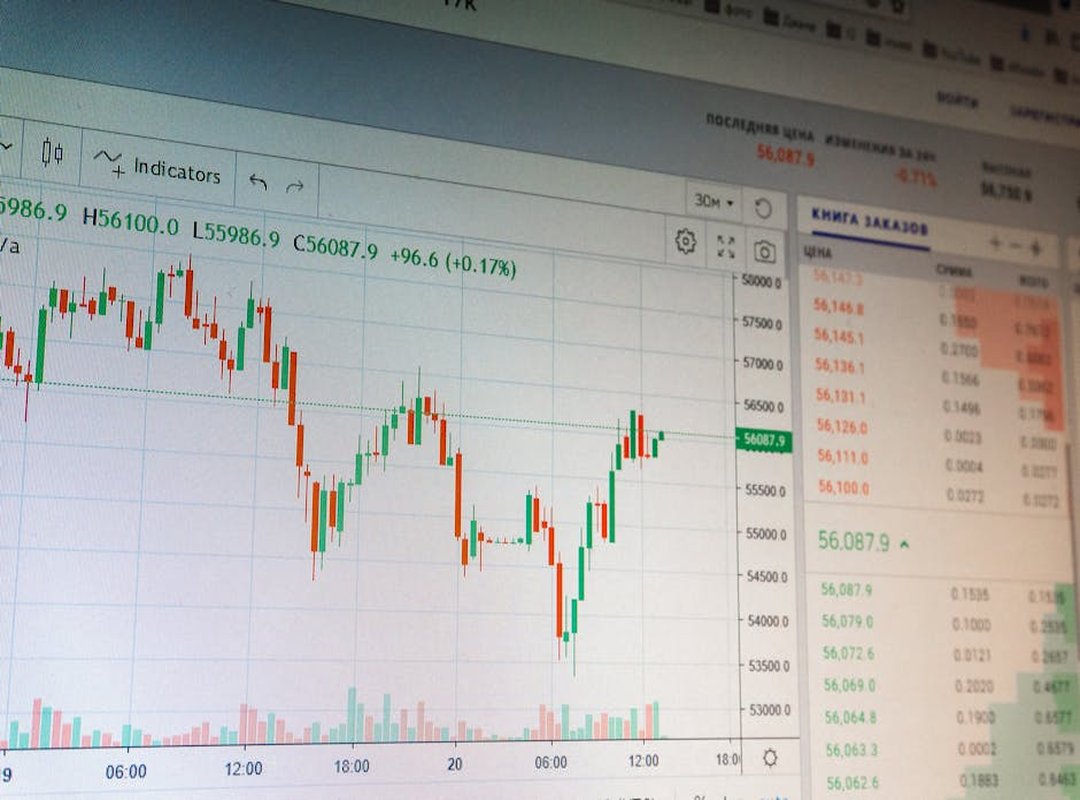
I ran the numbers. Twice.
I wrote more about this in Where to find funding advice rprinvesting.
Self-managed portfolios underperform benchmark-aligned ones by about 1.5% annually over ten years. DALBAR’s 2023 study confirms it. That’s not noise.
That’s $178,000 lost on a $750K portfolio.
You think you’re saving money. You’re not.
You’re trading fees for time. Eight to twelve hours every month. Reading headlines.
Second-guessing allocations. Refreshing your brokerage app like it’s Twitter.
That mental load wears you down. I’ve seen couples argue over Roth conversions. I’ve seen people freeze during market dips because they didn’t have a plan (just) Google results.
Then there’s the silent leakage.
Overlapping funds. Tax-inefficient lot sales. Accounts gathering dust at three different firms.
None of these scream “problem” (but) they bleed returns slowly. Every year.
Here’s what actually happens:
A $750K portfolio, self-managed: 0.75% annual advisory fee avoided, but 1.2% in hidden drag from taxes, overlap, and behavioral errors.
Same portfolio, advisor-guided: 0.95% fee, but net +0.8% annual outperformance after tax optimization and discipline.
After 15 years? The guided version ends up $242,000 ahead.
So ask yourself: Is Investment Advisor Worth It Rprinvesting?
Not as a theoretical question. As a math problem.
You don’t need a guru. You need someone who spots what you miss. And stops you from doing what feels right but isn’t.
Where to Find Funding Advice Rprinvesting is where I’d start. Not with hype. With clarity.
How to Spot a Real Advisor (Not Just a Salesperson)
I ask this question every time: Does this person get paid to help me (or) to sell something?
Fiduciary oath (in) writing. Not implied. Not verbal.
On paper. If they won’t sign it, walk out.
Transparent fees mean no revenue sharing. No hidden kickbacks from mutual fund companies. If their fee structure makes you squint, it’s not transparent.
They must document how they rebalance (and) how they handle taxes. Not “we watch it.” Not “we’re tax-aware.” Show me the log. Show me the trade list.
Client retention over 85%? That’s real. Below that?
Ask why people left.
Beware the “free” first meeting. It’s rarely free. It’s a pitch for proprietary funds.
Funds they earn more on.
“Complete planning” with no deliverables? That’s smoke.
Outsourcing portfolio construction? Then you’re paying for access to a model (not) judgment.
Ask them straight: Show me where my last three tax-loss harvesting opportunities were missed (and) how you’d prevent that going forward.
If they hesitate, or say “we don’t track that,” you already have your answer.
Check Form ADV Part 2A yourself. Not just credentials (read) the service scope. Read the disciplinary history.
Is Investment Advisor Worth It Rprinvesting? Only if they meet all four criteria.
Decide With Confidence (Not) Confusion
I’ve asked you the real question. Not “should you hire someone?” but “is Is Investment Advisor Worth It Rprinvesting for you (right) now?”
You know when things get messy. Market swings. A big life change.
That voice in your head telling you to sell low.
If you’re nodding. You’re not broken. You’re human.
And humans make predictable mistakes with money.
The math adds up. The psychology checks out. But only if it fits your goals, your discipline, your complexity.
So stop guessing.
Download the free 1-page advisor evaluation scorecard. It takes 90 seconds. No email wall.
No sales call waiting.
Fill it out before your next financial conversation.
That way, you walk in clear (not) confused.
Your money deserves intention (not) inertia.
Get the scorecard now.

 There is a specific skill involved in explaining something clearly — one that is completely separate from actually knowing the subject. Lenorette Schneiders has both. They has spent years working with market analysis and reports in a hands-on capacity, and an equal amount of time figuring out how to translate that experience into writing that people with different backgrounds can actually absorb and use.
Lenorette tends to approach complex subjects — Market Analysis and Reports, Investment Trends and Insights, Entrepreneurship Strategies being good examples — by starting with what the reader already knows, then building outward from there rather than dropping them in the deep end. It sounds like a small thing. In practice it makes a significant difference in whether someone finishes the article or abandons it halfway through. They is also good at knowing when to stop — a surprisingly underrated skill. Some writers bury useful information under so many caveats and qualifications that the point disappears. Lenorette knows where the point is and gets there without too many detours.
The practical effect of all this is that people who read Lenorette's work tend to come away actually capable of doing something with it. Not just vaguely informed — actually capable. For a writer working in market analysis and reports, that is probably the best possible outcome, and it's the standard Lenorette holds they's own work to.
There is a specific skill involved in explaining something clearly — one that is completely separate from actually knowing the subject. Lenorette Schneiders has both. They has spent years working with market analysis and reports in a hands-on capacity, and an equal amount of time figuring out how to translate that experience into writing that people with different backgrounds can actually absorb and use.
Lenorette tends to approach complex subjects — Market Analysis and Reports, Investment Trends and Insights, Entrepreneurship Strategies being good examples — by starting with what the reader already knows, then building outward from there rather than dropping them in the deep end. It sounds like a small thing. In practice it makes a significant difference in whether someone finishes the article or abandons it halfway through. They is also good at knowing when to stop — a surprisingly underrated skill. Some writers bury useful information under so many caveats and qualifications that the point disappears. Lenorette knows where the point is and gets there without too many detours.
The practical effect of all this is that people who read Lenorette's work tend to come away actually capable of doing something with it. Not just vaguely informed — actually capable. For a writer working in market analysis and reports, that is probably the best possible outcome, and it's the standard Lenorette holds they's own work to.