
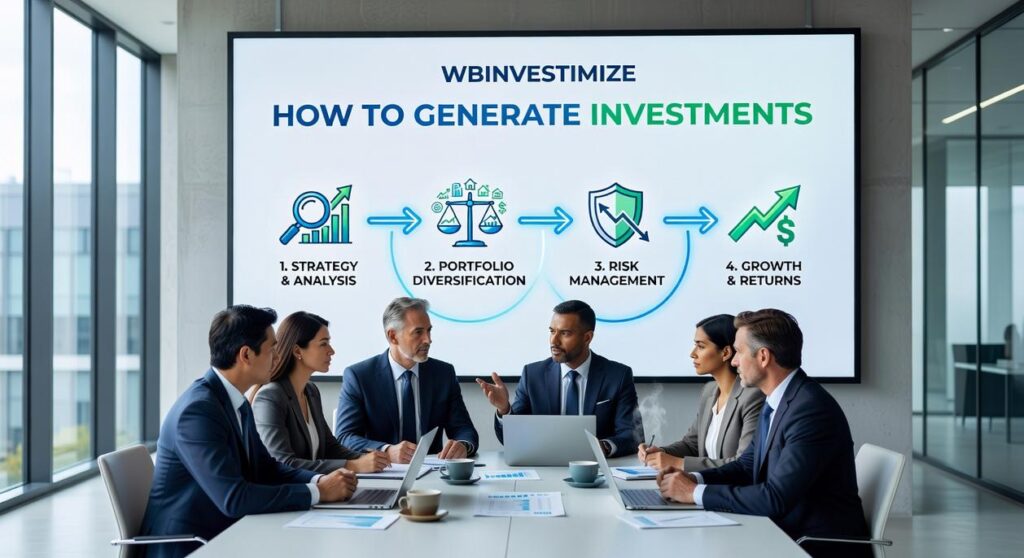
I’ve seen too many investors lose money because they’re chasing trends instead of following a system.
You’re probably tired of conflicting advice and market noise that makes every decision feel like a gamble. I understand that frustration.
Here’s the reality: investing doesn’t have to be complicated. But it does require a framework.
WBInvestimize is that framework. It’s a method built on data instead of emotion. On discipline instead of hype.
I developed this approach after watching countless investors make the same mistakes. They react to headlines. They buy high and sell low. They lack structure.
This guide walks you through the WBInvestimize methodology step by step. You’ll learn how to filter out noise, make decisions based on actual data, and build a portfolio designed to last.
We focus on what works. Not what sounds exciting or what everyone else is doing.
You’ll get a repeatable system you can use whether markets are up or down. A structured approach that removes guesswork and puts you in control.
No shortcuts. No magic formulas. Just a proven method for building real wealth over time.
The WBInvestimize Philosophy: Core Principles for Wise Investing
Most investment advice sounds good until you actually try to use it.
You know what I mean. Someone tells you to diversify. Great. But how? Another expert says buy low and sell high. Thanks for nothing.
I built wbinvestimize because I got tired of that kind of vague guidance.
What I needed back then was a real framework. Something I could actually follow when I sat down to make decisions about my money.
So let me walk you through the four principles that guide everything I do.
Clarity Over Complexity
Investing doesn’t need to be complicated.
I see people all the time who think they need to understand derivatives and exotic instruments to make money. They don’t. What they need is a clear strategy with objectives they can measure.
When you know how to generate investments wbinvestimize style, you focus on what you can understand and explain in plain terms. If you can’t describe your investment thesis in two sentences, you probably don’t have one.
Proactive Not Reactive
Here’s where most investors mess up.
They make decisions based on whatever headline scared them that morning. Market dips 2% and they panic. Some talking head predicts a crash and they sell everything.
That’s not investing. That’s just reacting.
I plan my moves ahead of time. Then when the market does its thing (and it always does something), I already know what I’m doing. The noise doesn’t matter because I’m working from a plan.
The Entrepreneurial Mindset
Think about your portfolio like a business.
You wouldn’t run a company by throwing money at random projects and hoping something works. You’d focus on sustainable growth. You’d manage risk. You’d allocate capital where it makes sense.
Your investments deserve the same approach. Every position should have a reason. Every allocation should serve a purpose.
Knowledge as Your Greatest Asset
I’m not going to tell you learning is fun.
But I will tell you it’s necessary. Markets change. New opportunities show up. Old strategies stop working.
The investors who do well are the ones who keep learning. They read the reports. They study the trends. They don’t just follow what worked last year and hope for the best.
That’s it. Four principles that actually mean something when you sit down to invest.
Pillar 1: Strategic Financial Planning – Your Investment Blueprint
Most people start investing backwards.
They pick stocks or funds first. Then wonder why their portfolio doesn’t match what they actually need.
I learned this the hard way. You need a plan before you buy anything.
Defining Your ‘Why’
Your financial goals can’t be vague. “I want to be rich” doesn’t cut it.
You need numbers. Dates. Real targets.
Maybe you want $2 million by age 60 for retirement. Or you’re building a fund to start a business in five years. Could be you just want to preserve what you’ve already built.
Write it down. Be specific. This becomes your North Star when markets get choppy (and they will).
Assessing Your Risk Tolerance
Here’s a simple test I use.
Imagine your portfolio drops 30% in three months. What do you do?
If you’d panic and sell everything, you can’t handle aggressive growth investments. If you’d buy more, you can stomach volatility.
Your honest answer here determines everything. It shapes how you allocate between stocks, bonds, and cash. Most people overestimate their risk tolerance until they actually see red numbers.
The ‘Core-Satellite’ Approach
Think of your portfolio in two parts.
Your core holds 70-80% of your money in stable, diversified index funds. This is your foundation. It grows steadily and doesn’t keep you up at night.
Your satellites are smaller positions. Maybe 20-30% total. These are your growth plays. Individual stocks. Sector bets. The stuff that could pop but might not.
This structure gives you stability plus upside. You’re not gambling with your future, but you’re not missing opportunities either.
Tax-Efficient Investing
Where you hold your investments matters as much as what you hold.
Put high-growth stocks in your Roth IRA. They grow tax-free. Keep bonds and REITs in your 401(k) since their income gets taxed heavily in regular accounts.
Your taxable brokerage? That’s for tax-efficient index funds and stocks you plan to hold long-term for capital gains treatment.
Getting this right can save you thousands every year. When you learn how to generate investments wbinvestimize through smart account placement, you keep more of what you earn.
The benefit here is simple. You build a system that works while you sleep.
Pillar 2: Intelligent Market Analysis – Finding Opportunity

You know that feeling when everyone’s talking about the next big thing?
The hot sector. The can’t-miss opportunity.
And you’re sitting there wondering if you should jump in or if you’re already too late.
Here’s what I’ve learned. Most people don’t lose money because they miss trends. They lose it because they can’t tell the difference between a real opportunity and noise.
So how do you actually read what’s happening in the market?
Start with the big picture. Interest rates shift. New technology emerges. Regulations change. These aren’t just headlines. They’re signals about where money will flow over the next five to ten years.
When rates drop, certain sectors wake up. When they rise, others get squeezed. You don’t need a PhD to see this. You just need to pay attention.
But macro trends only get you halfway there.
The real work is in the fundamentals. Revenue growth. Earnings consistency. How much debt a company carries. Whether they actually have something competitors can’t easily copy.
This is where most investors get tripped up. They see a beaten-down stock and think they’ve found a bargain. Sometimes they have. More often? They’ve found a value trap.
A value trap looks cheap for a reason. The business model is broken. The industry is dying. Management has no plan. (You can spot these if you know what to look for.)
The difference between undervalued and declining comes down to one question: can this company grow from here?
If the answer is no, the price doesn’t matter.
Now, you might be wondering how to generate investments wbinvestimize when you’re not a professional analyst. You don’t have time to read 50-page earnings reports or build financial models.
Fair point.
That’s where market reports come in. Professional analysts do the heavy lifting. But here’s the catch. Most people read these reports wrong. They get lost in the jargon or take recommendations at face value.
What you want to extract is simple. What’s the thesis? What could go wrong? What metrics actually matter for this specific company?
Skip the fluff. Focus on the numbers that tell you if a business can sustain growth.
And here’s something nobody talks about. Sometimes the best insight from a report is what it doesn’t say. When analysts avoid discussing capital expenditures wbinvestimize or gloss over debt levels, that’s a red flag.
The goal isn’t to become an expert overnight.
It’s to build a framework. One that helps you separate real opportunities from stories that sound good but fall apart under scrutiny.
Because at the end of the day, intelligent analysis isn’t about predicting the future. It’s about stacking the odds in your favor.
Pillar 3: Dynamic Portfolio Management – Growth and Scaling
Most people think portfolio management means buying and forgetting.
They’re wrong.
Your portfolio needs attention. Not constant tinkering (that’s how you rack up fees and taxes). But regular checkups to keep things on track.
Some investors say rebalancing is a waste of time. They argue that cutting winners to buy losers goes against basic momentum principles. Why sell what’s working?
Here’s why that thinking falls apart.
Without rebalancing, one good year in tech stocks can turn your balanced portfolio into a tech-heavy gamble. I’ve seen 60/40 portfolios drift to 80/20 because someone was afraid to trim their winners.
The Art of Rebalancing
I rebalance on a schedule. Quarterly for most clients. Annually for simpler portfolios.
Here’s how it works:
- Check your current allocation against your target
- Identify positions that have drifted more than 5%
- Sell portions of overweight positions
- Buy underweight assets back to target
This forces you to sell high and buy low. It’s counterintuitive but it works.
When to Sell an Investment
You need rules. Clear ones.
I sell when a position hits 25% of my portfolio (too concentrated). I sell when the original thesis breaks (the company pivots or fundamentals change). I sell when I need to rebalance.
What I don’t do? Panic sell on bad news or hold losers hoping they’ll recover.
Scaling Your Portfolio
As you grow your income, your portfolio should grow too. Whether you’re figuring out how to start a software business wbinvestimize or climbing the corporate ladder, new capital needs a home.
Don’t just dump it all in at once. Dollar cost average into your target allocation over three to six months.
Invest with Confidence and Clarity
You now have the WBInvestimize framework for investing wisely.
It covers planning, analysis, and management. Everything you need to move forward.
I know how frustrating it is to feel lost in the market. You’re tired of guessing and second-guessing every decision.
This structured approach changes that. It replaces confusion with a clear plan you can follow.
Here’s why it works: You’re focusing on core principles instead of chasing trends. You’re following a disciplined process that builds a resilient portfolio. One that works towards your goals no matter what the market does.
The noise doesn’t matter when you have a system.
Start by defining your financial goals today. Write them down. Be specific about what you want and when you need it.
That’s your first step towards becoming a more strategic investor.
how to generate investments wbinvestimize starts with clarity about where you’re going. Then you build the path to get there.
Take action now. Your future portfolio depends on the decisions you make today. Homepage.